
TOP 5 villa paint colours: elegant, luxurious and built to last
Aug 9, 2026
Choosing a paint colour for a villa is not simply a matter of personal preference: it involves striking a balance between architecture, light, materials and the surrounding landscape. The right choice can bring out the lines of a building, while a poorly judged combination readily costs the whole thing the refinement it should have. The article below suggests the villa paint colours trending in 2026, along with the principles of colour combination many architects work to.
In brief:
- Today's most attractive villa paint coloursfavour refined, elegant tones — cream white, slate grey, blue-black, sand yellow, earth brown — rather than anything too vivid.
- The choice of colour should follow the architectural style— modern, neo-classical, Indochine or garden villa — so the building reads as a coherent whole.
- The 60-30-10 rulebalances dominant, secondary and accent colours, keeping an exterior from becoming busy to the eye.
- Light, the orientation of the house and the surrounding landscapehave a great deal to do with how a paint colour reads once the work is finished.
- Owners may also consider colours by five-element feng shui, combining their own element, aesthetics and personal preference as they see fit.
- Favour premium exterior paintsthat resist UV, water and alkali and hold their colour, so the villa keeps its looks for years.
1. Attractive villa paint colours, by architectural style
Every colour leaves its own mark and suits a particular style of design. Below are the villa paint colours that bring out the beauty of the architecture and give a building a refined presence.
1.1. Porcelain white and cream white — a refinement beyond fashion
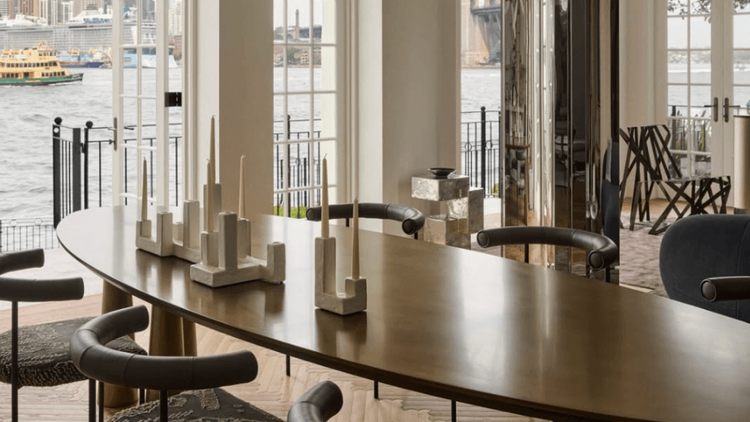
Porcelain white and cream white are classics that appear again and again in premium villa design. Beyond a sense of space and light, these colours give the whole building an understated elegance. A white ground also brings out the architectural details: balconies, glazed frames, decorative lighting and other exterior materials.
1.2. Slate grey and blue-black — refined and modern
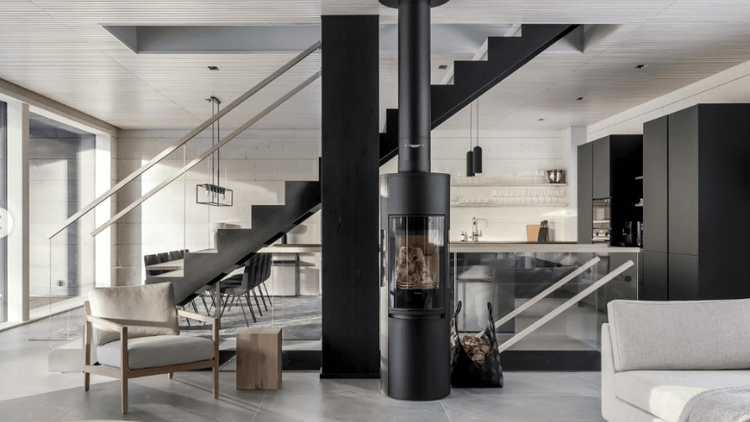
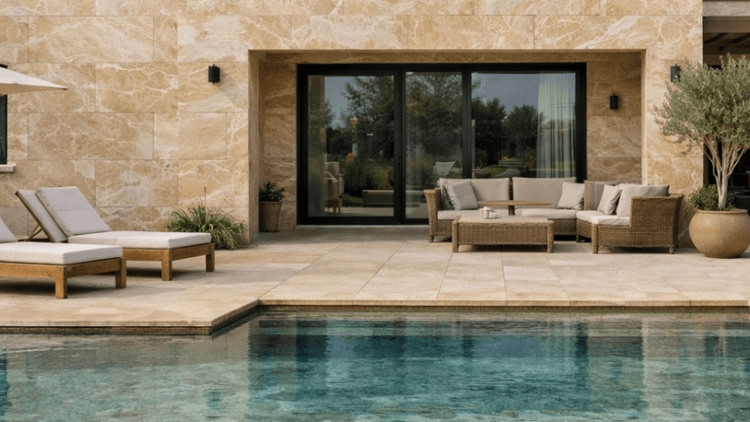
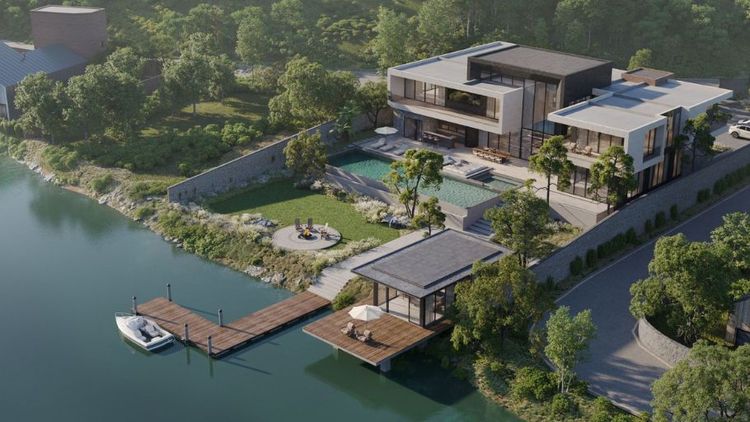
For villas with a strong geometry, square-set lines and generous glazing, slate grey and blue-black are the right choice for an exterior with force and character. These cool neutrals feel modern and pared back, very much in the Western architectural idiom.
1.3. Sand yellow and milk cream — warm and elegant
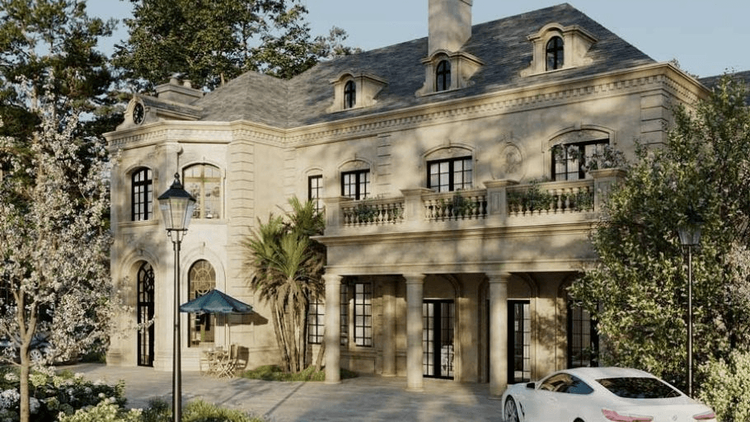
Sand yellow and milk cream are the ideal choice for neo-classical villas, or for anyone drawn to a European refinement. Compared with traditional yellow, these tones are gentler, feeling warm while keeping their subtlety. Combined with natural light, the villa becomes more striking and more appealing.
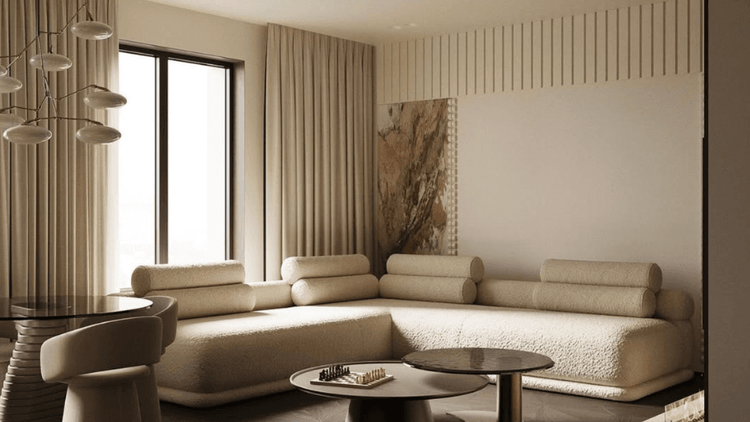
Sand yellow and milk cream feel warm and refined, suiting neo-classical villas and the European style
1.4. Earth tones (warm brown, terracotta) — close to nature and in harmony with it
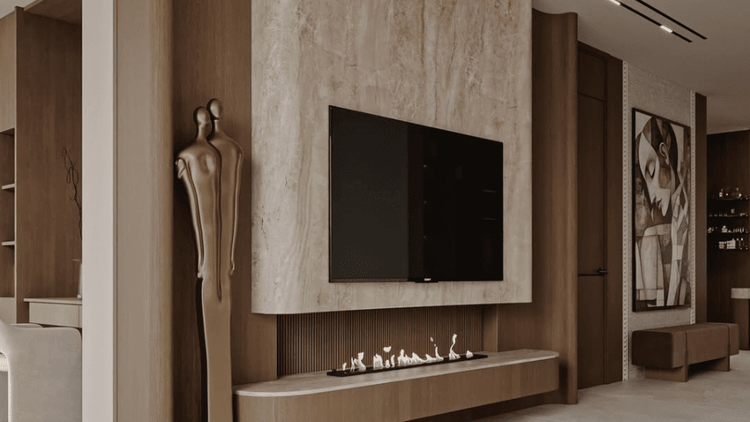
As green architecture and sustainable living have developed, colours drawn from nature — warm brown, sand, terracotta — have become steadily more popular. These tones suit garden villas particularly well, letting the building merge with the planting and feel close at hand and restful.
2. Suggested villa colour schemes by architectural style
Every architectural style has its own character of massing, material and feeling. Choosing a palette to suit brings out the beauty of the building as a whole, while expressing the owner's character and taste clearly.
2.1. Colour schemes for neo-classical and classical villas
With a beauty founded on refinement, elaboration and subtlety, neo-classical and classical villas usually suit understated tones combined with striking accents on the architectural details.
- Dominant colour:porcelain white, cream white or pale yellow, for a sense of elegance and space and a ground against which the decorative details read.
- Accent colour:bronze or deep slate on the mouldings, or blue-grey on the roof, to give the building greater presence and nobility.
- Character:this scheme brings out the curved lines, the motifs and the characteristic architectural details, producing an opulent, refined whole.
2.2. Colour schemes for modern villas (flat-roofed villas)
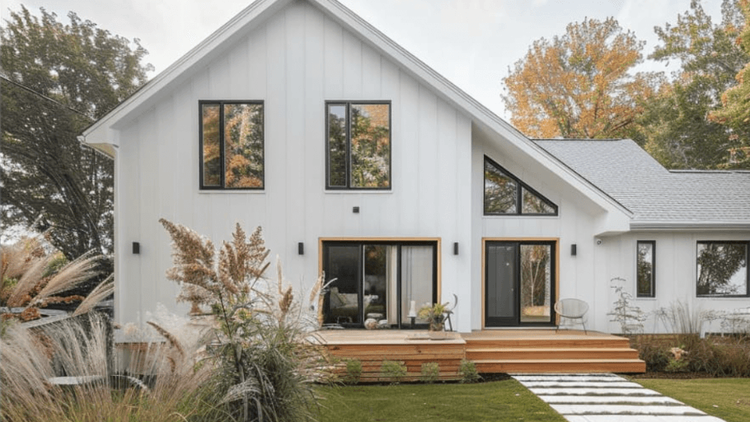
For modern villas, the palette usually aims at restraint and refinement, emphasising the beauty of forceful architectural masses.
- Dominant colour:white, pale slate or light neutrals, making the exterior feel more open and more modern.
- Accent colour:deep grey, black or timber-effect cladding for contrast, giving the frontage greater depth.
- Character:the interplay of light and dark brings out the decisive lines of the massing, for a modern beauty with character.
3. Suggested villa colour schemes by setting
Beyond architectural style, the surrounding landscape has a good deal to do with how an exterior colour reads. A palette in harmony with its setting makes a villa stand out while feeling balanced and close to nature.
3.1. Colour schemes for garden villas
Garden villas usually give priority to the connection with nature, so the paint colour should be gentle and unassuming, for a restful feel.
- Dominant colour:cream white, pastel green or light slate, keeping the building light and in harmony with the landscape.
- Accent colour:natural timber brown or pale moss green on doors, roof or decorative details, to feel closer at hand.
- Character:these easy tones let a villa merge with the planting and the garden, creating a private and comfortable retreat.
3.2. Colour schemes for coastal villas and open settings
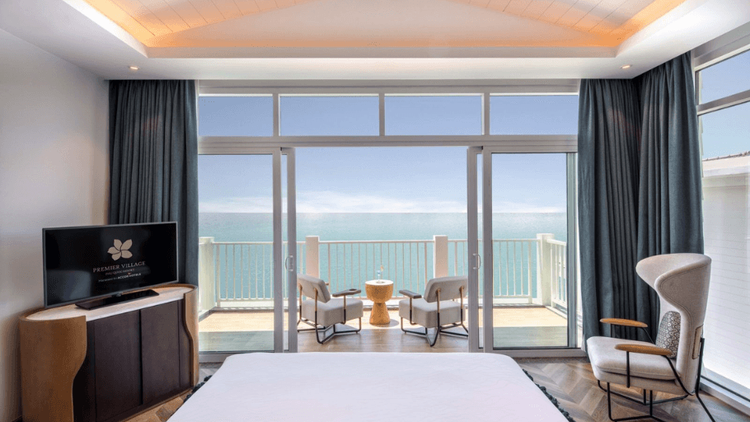
For villas by the sea or with a wide outlook, the palette should aim at lightness and freshness, in harmony with the natural landscape and in the spirit of a retreat.
- Dominant colour:white, cream white, turquoise or mint green, making the building bright and open and reflecting natural light well.
- Choice of paint:favour exterior paints that resist water, UV and flaking and stand up to a salt-laden environment, so the colour holds over time.
- Accent colour:navy blue, pale slate or natural timber details for a refined accent, giving the frontage depth.
- Character:cool tones let a villa merge with sky and sea, for a relaxed, comfortable feeling very much in the spirit of a holiday.
4. Suggested villa colour schemes by feng shui and orientation
For Vietnamese owners, a house that satisfies the feng shui brings positive energy, peace and wealth.
4.1. Choosing villa paint colours by destiny element
In five-element feng shui, each element has its generative and compatible colour groups, which makes choosing an exterior colour straightforward. Here are some suggestions for reference:
| Element | Birth years (examples) | Compatible colours (choose) | Conflicting colours (avoid) |
|---|---|---|---|
| Metal | 1984, 1985, 1992, 1993... | Porcelain white, cream white, slate grey, pale yellow | Red, pink, deep orange (fire conflicts with metal) |
| Wood | 1988, 1989, 2002, 2003... | Green, deep sea blue, black, blue-grey | White, metallic (metal conflicts with wood) |
| Water | 1982, 1983, 1996, 1997... | Blue, porcelain white, light grey | Earth yellow, earth brown (earth conflicts with water) |
| Fire | 1986, 1987, 1994, 1995... | Pastel pink, pale orange, red and brown accents | Blue, black (water conflicts with fire) |
| Earth | 1990, 1991, 1998, 1999... | Earth yellow, warm brown, milk cream, pale pink | Green (wood conflicts with earth) |
Please note: these feng shui colour choices are offered for reference. Owners should bring feng shui, architectural style and personal preference into harmony to arrive at a coherent whole.
4.2. Choosing exterior paint colours by orientation
Beyond the destiny element, orientation is something many owners consider when choosing a villa's colour. Each orientation has its own conditions of light and climate, which in turn affect how the colour of a building is perceived.
- East / south-east:these orientations take plenty of morning light and suit greens, blues and colours that feel fresh and close to nature.
- West / north-west:usually exposed to the afternoon sun, so favour light, cool tones such as white, milk white or pale blue, which are easier on the eye.
- South:relatively favourable light, suiting a wide range of palettes, particularly warm tones such as pale pink, pale orange or pastel red.
- North:usually gets little direct light and feels cooler, so warm colours such as cream yellow, pale yellow or brick red help balance the space and make it feel closer at hand.
Alongside choosing a colour to suit the architecture and the feng shui, many owners also think about when to break ground, so the build goes well. If you are planning to build in the near future, see our article on favourable ages for building in 2027 for a fuller preparation before you begin.
5. Principles of villa colour combination, as the experts apply them
The right palette does more than make a villa stand out: it lifts the architectural value of the whole. To avoid a poorly judged combination, architects usually apply the following basic principles when choosing an exterior colour.
5.1. The golden 60-30-10 rule
This is a widely used principle in interior design and architecture, balancing the areas of colour across the building:
- 60% dominant colour:covering most of the area — walls, the villa's frontage. Neutrals such as white, cream and beige are usually favoured, for a sense of space and elegance.
- 30% secondary colour:for architectural details such as columns, roof edges, secondary wall planes or mouldings. Usually one or two shades deeper than the dominant colour, to give depth.
- 10% accent colour:for smaller details such as doors, balustrades, metalwork or decorative motifs. Strongly contrasting colours make the building more striking.
3.2. No more than three colours on an exterior
A villa's exterior should aim at refinement and coherence, so using too many colours can make the whole thing busy to the eye and cost the building its elegance. As a rule, combine at most three main colours and distribute them in sensible proportions for balance.
3.3. How natural light affects paint colour
The colour as painted can differ from the sample card, particularly under outdoor light. Owners should therefore consider the orientation of the house and the intensity of the sun before settling on a colour.
- West-facing villas:usually take strong afternoon sun, so favour cool tones such as slate, pale grey or neutrals, which are easier on the eye.
- North-facing villas:receive little natural light, so warm tones such as cream, pale yellow and beige make the exterior brighter and more alive.
6. Frequently asked questions about villa paint colours
6.1. Which villa paint colour suits every architectural style?
Neutrals such as cream white, beige, light slate and pale grey are the safe choice for almost any architectural style, from modern and neo-classical to Indochine. These tones combine readily with stone cladding, timber, metal and the garden landscape, and they bring a refinement that dates slowly.
6.2. Should a villa be painted in a single colour?
Better not. Using two or three tones gives the building depth and brings out architectural details such as columns, roof, balconies and mouldings. Apply the 60-30-10 rule, with the dominant colour across most of the area, combined with a secondary and an accent colour for a more harmonious whole.
6.3. Does a feng shui villa colour have to follow the destiny element 100%?
Not necessarily. Owners can choose colours that suit the architectural style and use the feng shui colour either as the dominant tone or as an accent. What matters is that the building as a whole stays balanced in colour and aesthetics and suits the family's own taste.
6.4. How often should a villa be repainted?
As a rule, a villa should be repainted every five to eight years, depending on the quality of the paint, the weather and the level of maintenance. Where a building regularly takes harsh sun, heavy rain or high humidity, the paint can deteriorate faster. Checking and cleaning the surface periodically also extends its life and keeps the colour looking good.
Choosing a villa paint colour calls for architecture, landscape, feng shui and material quality all to be weighed together, so the building keeps its looks over time. SENDESIGN will work alongside you through the design and colour consultation, helping realise a living space that is harmonious and distinguished. Contact SENDESIGN today and our architects will advise on a colour scheme to suit the style and the particular character of your building.
To keep the palette, the finish materials and the space as a whole coherent from the outset, owners should choose a professional villa interior design service. Working out the design before construction keeps colour and proportion under control and secures consistency between the exterior architecture and the interior.
Experience our professional main-contractor service and realise your ambitions for a home with SENDESIGN's specialists today!
Ready to See These Floors in Person?
Visit our Hanoi showroom or send us a message - our team can help you match a floor to your exact space, budget and lifestyle.